SVG Path Editor Documentation#
A high-precision Python library for editing, transforming, and optimizing SVG paths programmatically.
It is a port of svg-path-editor-lib 1.0.3 to Python with significant improvements:
High-precision, decimal-based geometry: all coordinates use
decimal.Decimal, with SymPy-backed trigonometry and configurable precision to avoid binary floating-point artefacts.Rich editing and transformation API: in-place and out-of-place geometric transforms, absolute/relative conversion, and a
list-like path structure API (insert,remove,change_type,set_location, …).Advanced path processing: corner rounding, robust line/ellipse offsetting, bevel-path generation, and Lambertian bevel shading utilities.
Path optimization and utilities: compact, semantically equivalent paths via
optimize_path(), plus helpers such asreverse_path()andchange_path_origin().Typed, documented, and thoroughly tested: extensive type hints, docstrings, and a
pytestsuite with 100% coverage.
Quick Start#
Basic Usage#
A good place to start is to parse an SVG path string into an SvgPath and print it:
from svg_path_editor import SvgPath

path = SvgPath("M-15 14s5 7.5 15 7.5 15-7.5 15-7.5 z")

# SvgPath implements __str__ with fairly readable (non-minified) output
# M -15 14 s 5 7.5 15 7.5 s 15 -7.5 15 -7.5 z
print(path)

# Custom decimals and minified output (decimals=None, minify=False by default)
# M-15 14s5 7.5 15 7.5 15-7.5 15-7.5z
print(path.as_string(decimals=1, minify=True))

# SvgPath also implements __format__, with m denoting minify=True
print(f"{path:.1m} or {path:m.1}")
Geometric Operations#
Geometric operations are available in both out-of-place and in-place variants.
Out-of-place#
path = SvgPath("M-15 14s5 7.5 15 7.5 15-7.5 15-7.5 z")

# Out-of-place scale
# M -30 28 s 10 15 30 15 s 30 -15 30 -15 z
print(path.scaled(kx=2, ky=2))

# Out-of-place translate
# M -14 14.5 s 5 7.5 15 7.5 s 15 -7.5 15 -7.5 z
print(path.translated(dx=1, dy=0.5))

# Out-of-place rotate around (0, 0)
# M -14 -15 s -7.5 5 -7.5 15 s 7.5 15 7.5 15 z
print(path.rotated(ox=0, oy=0, degrees=90))
In-place#
path = SvgPath("M-15 14s5 7.5 15 7.5 15-7.5 15-7.5 z")

# In-place scale
# M -30 28 s 10 15 30 15 s 30 -15 30 -15 z
path.scale(kx=2, ky=2)
print(path)

# In-place translate
# M -29 28.5 s 10 15 30 15 s 30 -15 30 -15 z
path.translate(dx=1, dy=0.5)
print(path)

# In-place rotate
# M -28.5 -29 s -15 10 -15 30 s 15 30 15 30 z
path.rotate(ox=0, oy=0, degrees=90)
print(path)
Absolute vs. Relative Commands#
Commands can be stored as either absolute (M, L, C, …) or relative (m, l, c, …).
Conversion is available in-place via a property and out-of-place via a method:
path = SvgPath("M-15 14s5 7.5 15 7.5 15-7.5 15-7.5 z")

# In-place: `SvgPath.relative` mutates the instance
path.relative = False
# M -15 14 S -10 21.5 0 21.5 S 15 14 15 14 Z
print(path)

# Out-of-place: `SvgPath.with_relative()` returns a new path
relative = path.with_relative(True)
# m -15 14 s 5 7.5 15 7.5 s 15 -7.5 15 -7.5 z
print(relative)
Path Modification#
SvgPath exposes methods that modify the structure of a path in place, including parts of the list API:
from svg_path_editor import Point, SvgPath
from svg_path_editor.svg import QuadraticBezierCurveTo

path = SvgPath("M0 0L10 0V10Z")

# Deep copy
clone = path.clone()
# M 0 0 L 10 0 V 10 Z
print(clone)

# In-place removal of the `L` command
path.remove(path.path[1])
# M 0 0 V 10 Z
print(path)

# In-place insertion of a quadratic Bézier curve where the `L` command was
path.insert(1, QuadraticBezierCurveTo([5, -5, 10, 0], relative=False))
# M 0 0 Q 5 -5 10 0 V 10 Z
print(path)

# In-place command type change from `V` to `L` (equivalent, but longer)
path.change_type(2, "L")
# M 0 0 Q 5 -5 10 0 L 10 10 Z
print(path)

# In-place move of a particular point
path.set_location(path.target_locations[-2], to=Point(5, 10))
# M 0 0 Q 5 -5 10 0 L 5 10 Z
print(path)

# The clone is unaffected by these changes
print(clone)
Higher-Level Path Operations#
These functions operate on paths out-of-place:
from svg_path_editor import SvgPath, change_path_origin, reverse_path

path = SvgPath("M-15 14s5 7.5 15 7.5 15-7.5 15-7.5 z")

# Reverse path direction
# M 15 14 S 10 21.5 0 21.5 S -15 14 -15 14 Z
print(reverse_path(path))

# Change the origin (starting command) within a subpath
# M 0 21.5 c 10 0 15 -7.5 15 -7.5 L -15 14 s 5 7.5 15 7.5
print(change_path_origin(path, new_origin_index=2))
Rounding Corners#
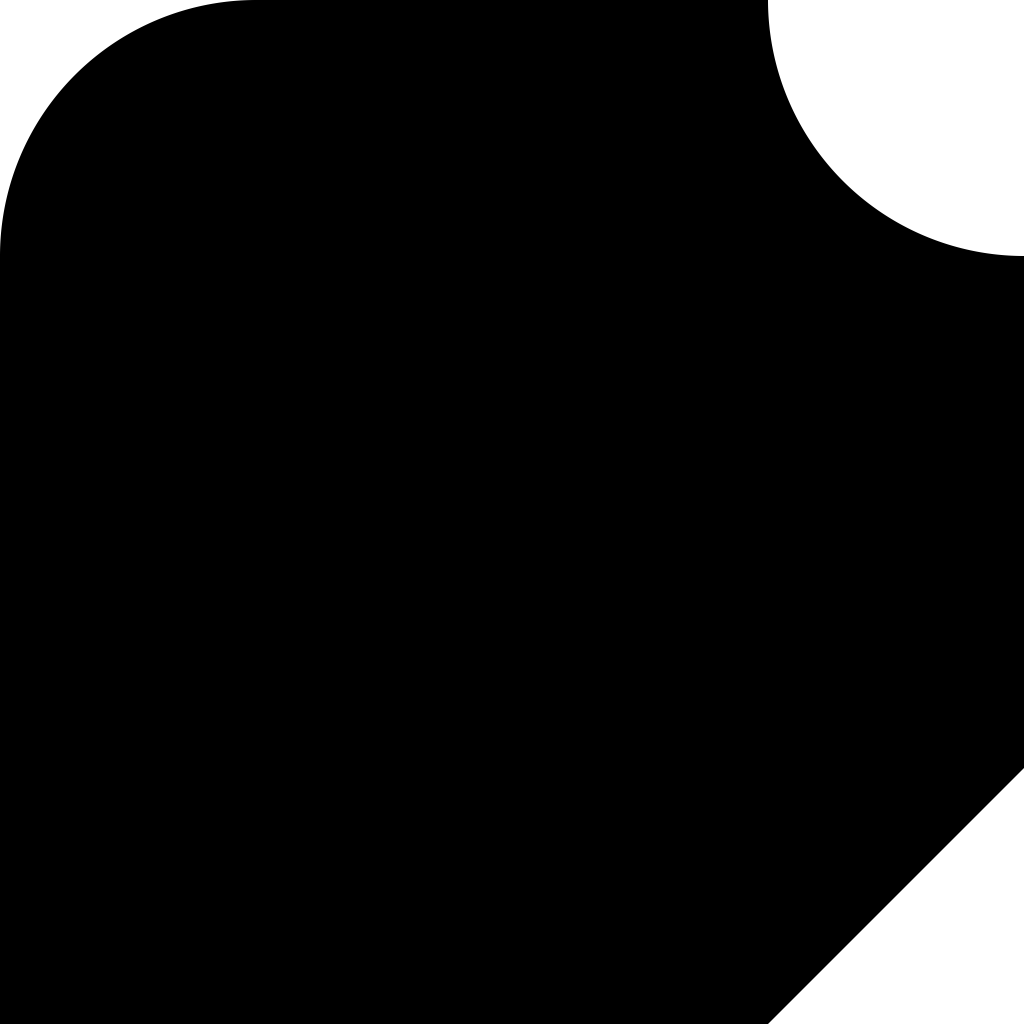
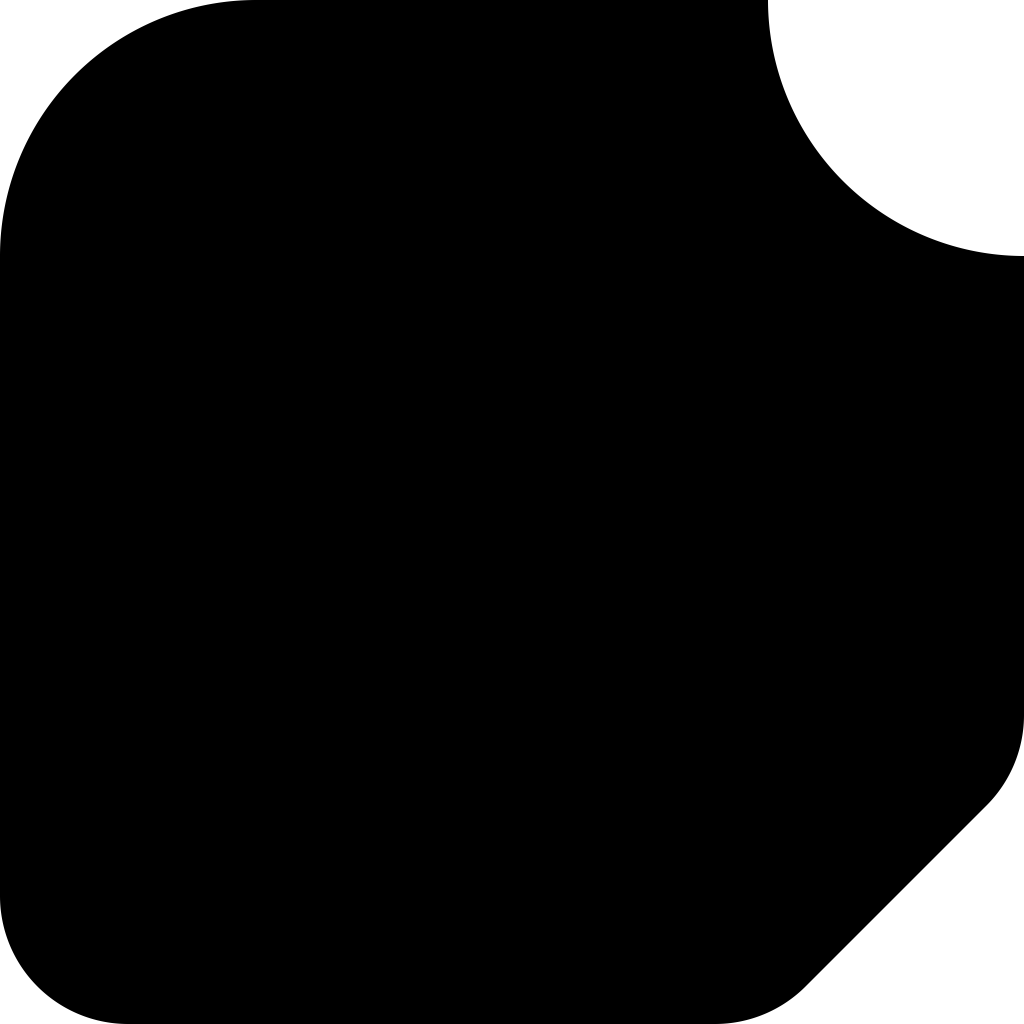
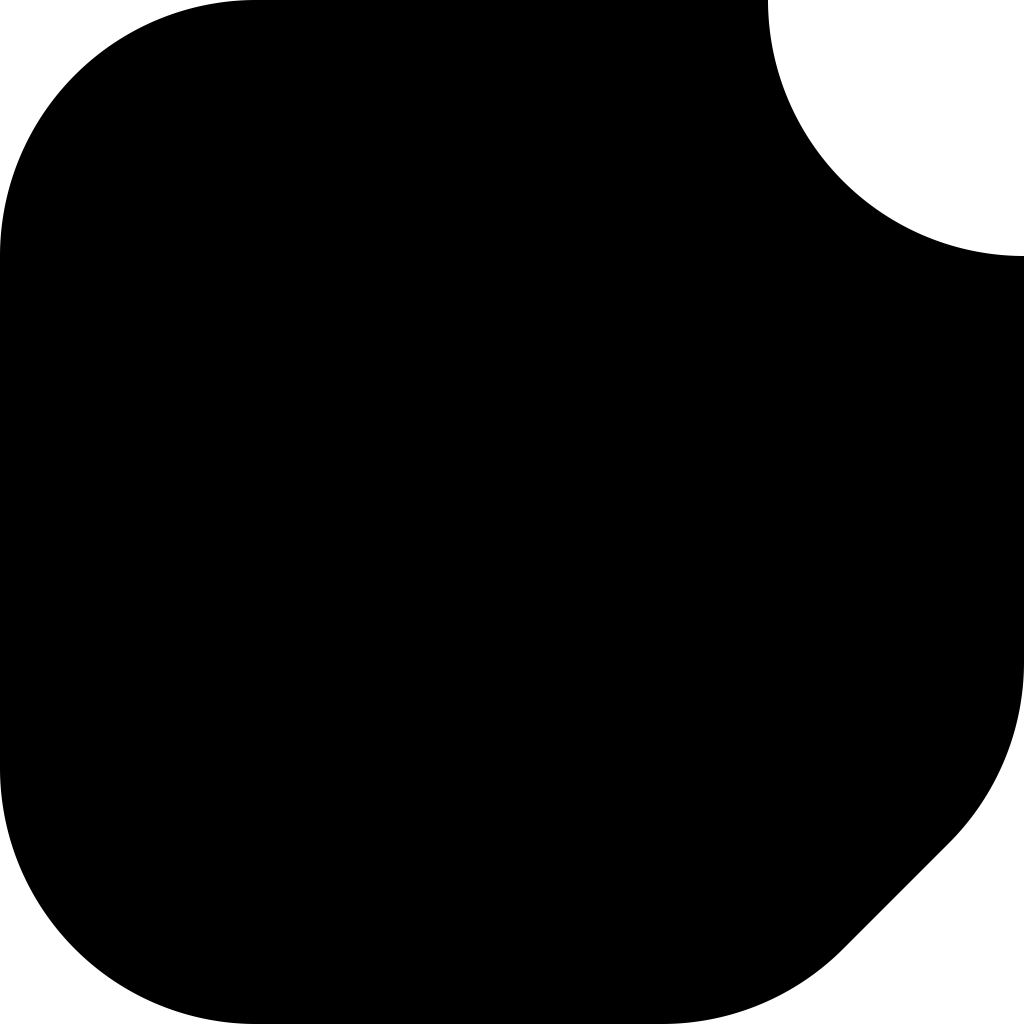
round_corners() replaces sharp corners between straight segments in closed subpaths with circular arcs, operating out-of-place:
from svg_path_editor import Point, SvgPath, round_corners

path = SvgPath("M 0 0 H 10 V 8 l -2 2 H 0 Z")

rounded = round_corners(
    path,
    # Required: round with a radius of 2
    radius=2,
    # Optional: round all corners other than Point(0, 10) or Point(10, 0)
    # a → b and b → c are the two segments that make up the corner, with b as the corner point
    selector=lambda a, b, c: b not in (Point(0, 10), Point(10, 0)),
)

# M0 2A2 2 0 012 0H10V7.1716A2 2 0 019.4142 8.5858L8.5858 9.4142A2 2 0 017.1716 10H0Z
print(f"{rounded:.4m}")
Input |
Rounded with radius 1 |
Rounded with radius 2 |
|---|---|---|
|
|
|
Offsetting Paths#
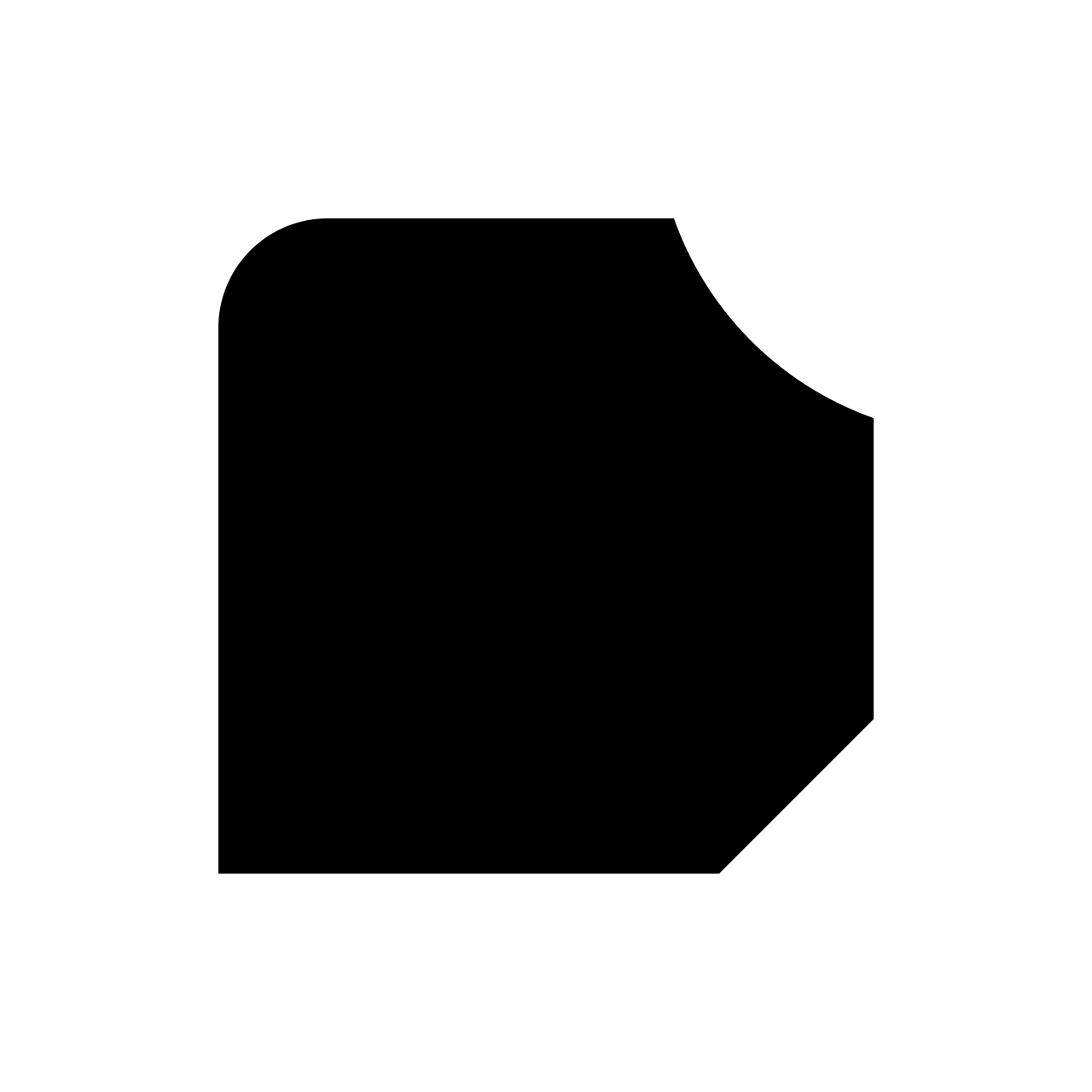
This library supports high-precision offsetting of a closed path consisting of straight lines and elliptical arcs inward or outward by a given distance:
from svg_path_editor import SvgPath, offset_path

# A complex path with various arcs
path = SvgPath(
    "M 5 0 A 5 5 0 0 0 0 5 A 5 10 0 0 0 5 15 "
    "a 5 5 0 0 1 5 -5 V 5 H 5 a 5 5 0 0 0 5 -5 Z"
)

# Offset the path
inset = offset_path(
    path,
    # Required: offset by 1 inwards (negative values offset outwards)
    d=1,
    # Optional: use numeric computations with automatic precision
    prec="auto",
)

# M 5 1 A 4 4 0 0 0 1 5 A 4 9 0 0 0 4.1249 13.782 A 6 6 0 0 1 9 9.0839 L 9 6 L 4 6 L 4 4 L 5 4 A 4 4 0 0 0 8.873 1 Z
print(f"{inset:.4}")
The prec parameter controls how offset_path() operates:
prec=None: fully symbolic intermediate computations using SymPy. Can be very slow, especially for arcs based on rotated ellipses.prec="auto": mostly numeric computations with the currentDecimalprecision plus a safety margin (8 digits by default). Fastest option, with results at full precision in all tests.prec="auto-intersections": offset segments are computed symbolically, but intersections are still computed mostly numerically.prec=Precision(baseline=…, additional=…): explicitly set the desired baseline precision and the additional safety margin.
Similarly, bevel_path() has the same parameters as offset_path() and generates a sequence of small closed paths that fill the gap between the original path and its offset (the “bevel” region), which can be used for shading:
from svg_path_editor import SvgPath, bevel_path

# A path looking somewhat like an anvil
path = SvgPath("M 0 0 h 2 a 1 1 0 0 1 -1 1 h 1 v 1 h -2 Z")

# M 0 0 L 2 0 L 1.894427190999915878563669467 0.1 L 0.1 0.1 Z
# M 2 0 a 1 1 0 0 1 -1 1 L 1 0.9 A 0.9 0.9 0 0 0 1.894427190999915878563669467 0.1 Z
# M 1 1 L 0.9 0.9 L 1 0.9 Z
# M 1 1 L 0.9 1.1 L 0.9 0.9 Z
# M 1 1 L 2 1 L 1.9 1.1 L 0.9 1.1 Z
# M 2 1 L 2 2 L 1.9 1.9 L 1.9 1.1 Z
# M 2 2 L 0 2 L 0.1 1.9 L 1.9 1.9 Z
# M 0 2 L 0 0 L 0.1 0.1 L 0.1 1.9 Z
for p in bevel_path(path, d="0.1"):
    print(p)
Offset inward |
Input |
Offset outward |
|---|---|---|
|
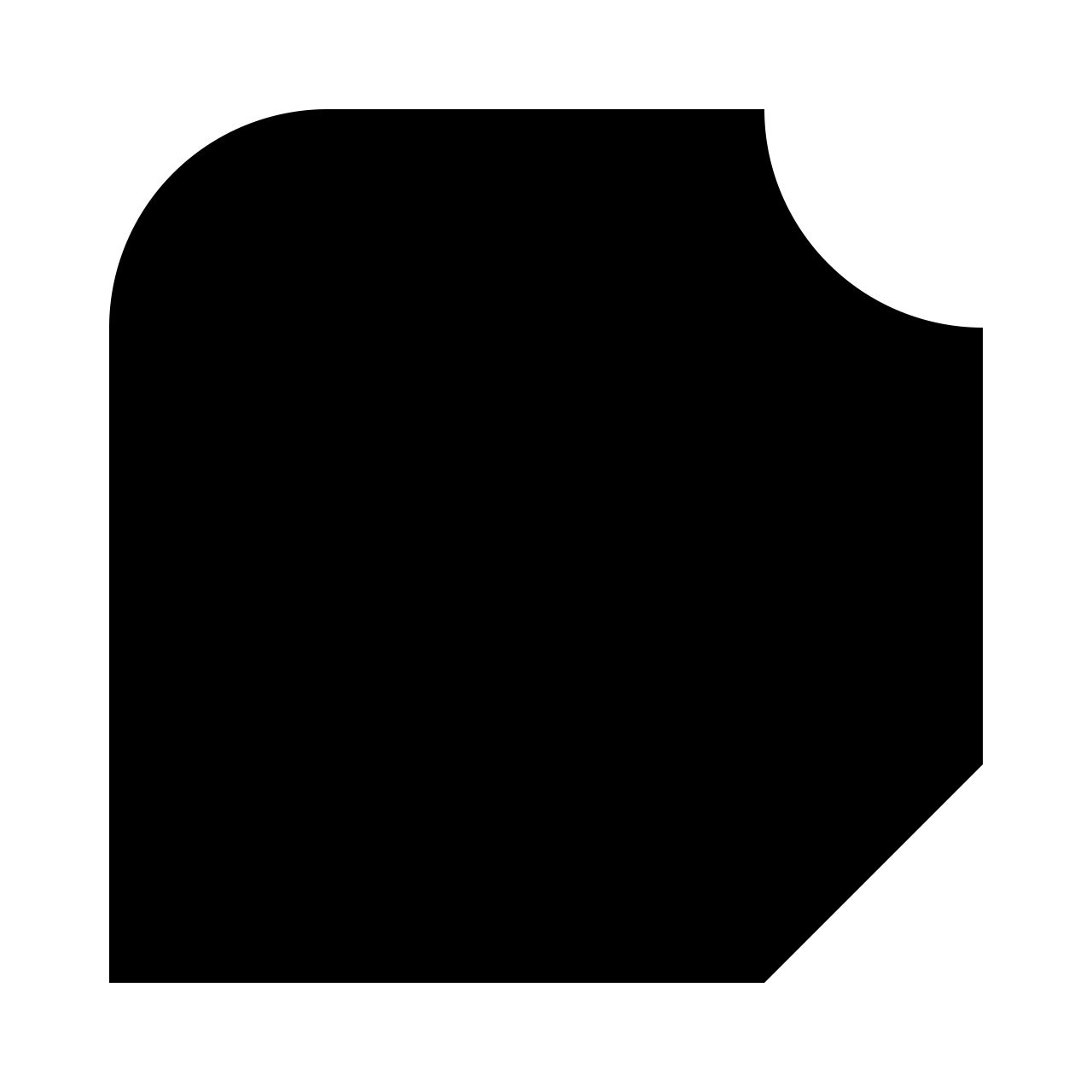
|
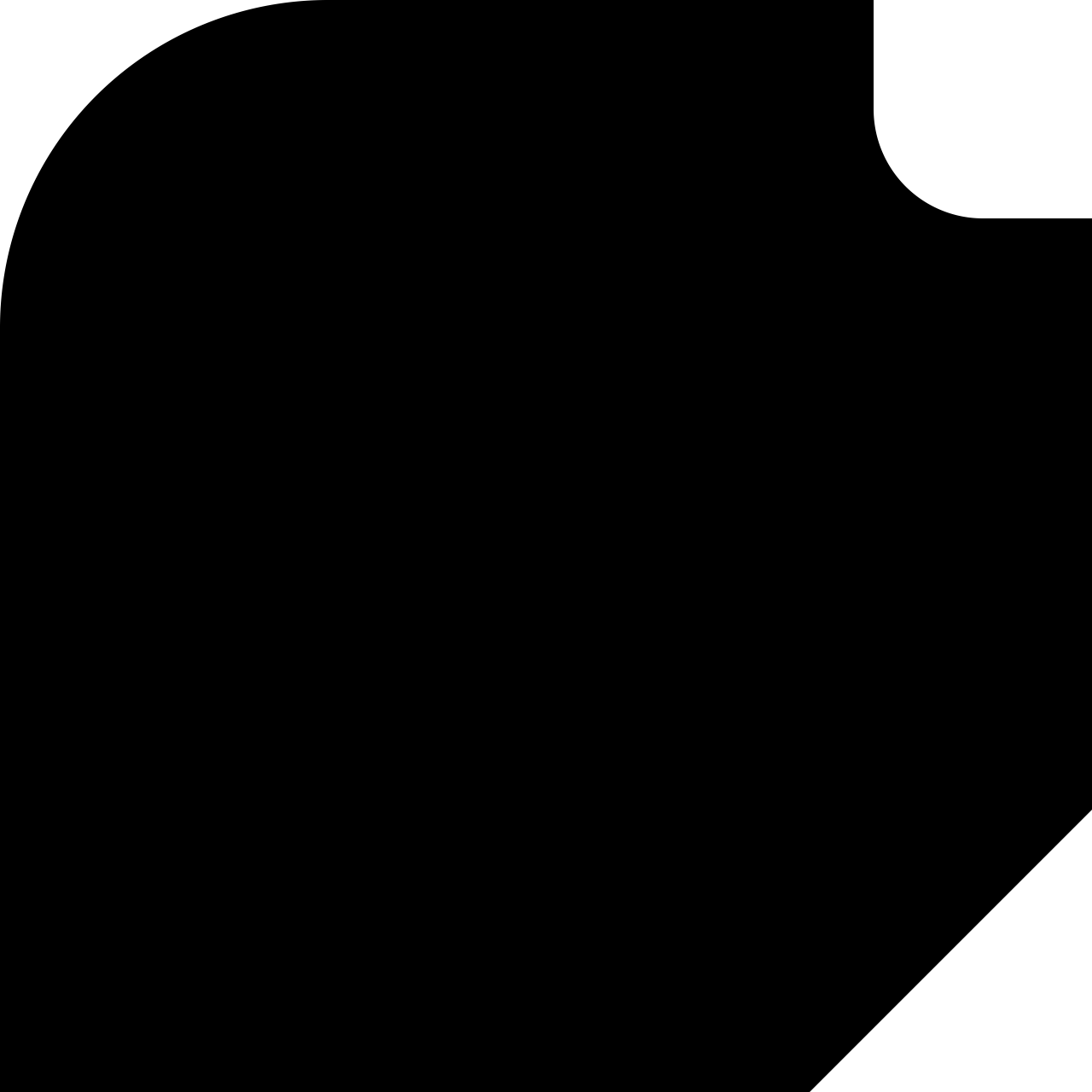
|
Warning
Most SVG renderers implement fairly primitive antialiasing that is prone to hairline gaps between the parts of the bevel regions.
The option shape-rendering="crispEdges" can be used to remove hairline gaps at the cost of removing antialiasing (in testing), which only leads to acceptable results in very limited circumstances.
Rendering the SVG at a (much) higher resolution and downsampling is a brute-force solution that has been used to render the pictures shown here.
Rendering at an integer multiple of the SVG size in image units helps with horizontal and vertical lines, too.
Lambertian Bevel Shading#
The library can generate simple light-dark bevel shading using a Lambertian model on top of bevel_path().
The svg_path_editor.shading.shade_path() function takes a SvgPath, a bevel distance, and various optional arguments (including the z-height of the light source, a neutral intensity threshold, and texture settings), and returns a PathShading object.
Flat bevels are shaded analytically from their normals; curved bevels reuse a small pre-rendered Lambertian “cone” texture, which encodes a binary light/dark mask with a soft alpha ramp around the chosen threshold.
PathShading.defs_body contains shared <image> definitions for these textures, and PathShading.body contains the per-bevel drawing elements that reference them.
You typically place defs_body once inside <defs> and insert body where you draw the path:
from svg_path_editor import SvgPath
from svg_path_editor.shading import PNG, WEBP, shade_path

svg = SvgPath("M 0 0 h 2 a 1 1 0 0 1 -1 1 h 1 v 1 h -2 Z")

shading = shade_path(
    svg,
    # Required: Bevel offset
    d="0.1",
    # Required: Pixels per SVG unit for textures
    resolution=64,
    # Optional: The z-height of the light source (default: 1)
    z_height=2,
    # Optional: Neutral Lambert intensity at which the shading is transparent (default: 0.5)
    threshold=0.5,
    # Optional: The maximum opacity of the shading (default: 1)
    max_opacity=0.8,
    # Optional: The image format (predefined: PNG and WEBP; default: WEBP)
    format=WEBP,
)

defs = "\n".join(shading.defs_body)
body = "\n".join(shading.body)
Input |
Shaded ( |
Shaded ( |
|---|---|---|

|

|

|
Warning
Since this operation is based on the bevel operation described before, it inherits its limitations with respect to hairline gaps.
Decimal-Based Geometry#
Internally, all coordinates and numeric parameters are stored as decimal.Decimal:
Constructors and geometric methods accept
int,float,str, orDecimal, and convert toDecimalimmediately.Arithmetic (translation, scaling, rotation, etc.) is performed in terms of
Decimalto retain the decimal representation in an SVG path and avoid binary round-off errors.The decimal precision is controlled via Python’s
decimalcontext.
from decimal import localcontext
from svg_path_editor import SvgPath

path = SvgPath("M0 0h10v10z")

# Default precision: 28 digits
# Rotation uses SymPy for high-precision trigonometric functions
rotated = path.rotated(0, 0, -45)
# M 0 0 l 7.071067811865475244008443621 -7.071067811865475244008443621 l 7.071067811865475244008443621 7.071067811865475244008443621 z
print(rotated)
# Precision can be reduced when printing
# M 0 0 l 7.07107 -7.07107 l 7.07107 7.07107 z
print(f"{rotated:.5}")

# The precision can be controlled using `getcontext`/`localcontext`
# Since `Decimal` is a floating-point format, the precision specifies the total
# number of significant digits, not just the number of decimal places
with localcontext() as ctx:
    ctx.prec = 6
    rotated = path.rotated(0, 0, -45)
    # Same output as before, even without explicit precision reduction
    # M 0 0 l 7.07107 -7.07107 l 7.07107 7.07107 z
    print(rotated)
Path Optimization#
optimize_path() rewrites a path into an equivalent but more compact form and operates out-of-place:
from svg_path_editor import SvgPath, optimize_path

path = SvgPath("M-15 14s5 7.5 15 7.5 15-7.5 15-7.5 z")

optimized = optimize_path(
    path,
    # Remove redundant M/Z or degenerate L/H/V
    remove_useless_commands=True,
    # Remove empty closed subpaths (M immediately followed by Z)
    remove_orphan_dots=True,
    # Convert eligible C/Q to S/T
    use_shorthands=True,
    # Replace L with H/V where possible
    use_horizontal_and_vertical_lines=True,
    # Choose relative/absolute per command to minimize size
    use_relative_absolute=True,
    # Try reversing path direction if it reduces output length
    # This may change the appearance of stroked paths!
    use_reverse=True,
    # Convert final line segments that return to start into Z
    # This may change the appearance of stroked paths!
    use_close_path=True,
)

# More readable form
# M -15 14 s 5 7.5 15 7.5 S 15 14 15 14 z
print(optimized)
# Minified form
# M-15 14s5 7.5 15 7.5S15 14 15 14z
print(f"{optimized:m}")